Why Failing at Camp Might Be the Best Thing That Ever Happens to Your Kid
Let's be honest — no parent signs their kid up for camp hoping they'll struggle. You picture sunsets over the lake, new friendships, maybe a merit badge or two. What you probably don't picture is your child tipping a canoe in 58-degree water, getting lost on a trail for two hours, or watching a three-day shelter project collapse in a rainstorm.
But here's the thing: those moments? They might be the most valuable ones your kid has all year.
There's something happening at northern wilderness camps that's hard to manufacture anywhere else. Call it the Northern Camp Effect. It's the slow, sometimes uncomfortable, occasionally muddy process by which a kid who was afraid to get a B-minus on a math test starts treating setbacks like information instead of verdicts.
The Problem With a Failure-Free Childhood
Kids today are growing up in environments that are, in many ways, extraordinarily optimized. Grades are tracked in real time. Social media filters out the awkward moments. Participation trophies soften the sting of competition. None of this is malicious — parents and teachers genuinely want kids to feel good. But the unintended side effect is a generation of young people who have had very little practice sitting with discomfort and working through it.
Dr. Carol Dweck's research on growth mindset has been widely cited in education circles, but the core idea is simple: kids who believe their abilities are fixed tend to avoid challenges. Kids who believe effort leads to improvement lean into them. The tricky part? You can't just tell a kid to have a growth mindset. They have to experience enough small failures — and survive them — before the belief actually sticks.
That's where the north comes in.
Why the Northern Environment Is Different
There's a reason northern wilderness camps have a reputation for producing unusually grounded, capable young people. It's not magic. It's geography.
The northern environment is genuinely unpredictable in ways that a suburban soccer field or a classroom simply isn't. A weather system can roll in from Canada and turn a sunny afternoon into a sideways rainstorm in under an hour. A trail that looked manageable on the map turns into a scramble over wet granite. The fish aren't biting. The fire won't start. The group can't agree on which direction to hike.
These aren't engineered failure scenarios. They're just Tuesday.
And that authenticity matters enormously. When a kid fails at something real — not a simulation, not a test with a predetermined right answer — the recovery feels real too. Nobody handed them the solution. They figured it out, or they regrouped with their team, or they made camp early and tried again the next morning. Either way, they walked away knowing something about themselves that no classroom lesson could have taught.
What Campers Actually Say
Talk to kids who've spent a summer at a northern camp and you start hearing a pattern in the stories they tell.
There's the 14-year-old from suburban Ohio who spent two full days trying to complete a solo navigation challenge and got it wrong both times. On the third attempt, she made it — and described the experience as "the first time I ever actually earned something." She went home and voluntarily signed up for AP Chemistry, a class she'd been avoiding because she was afraid of looking dumb.
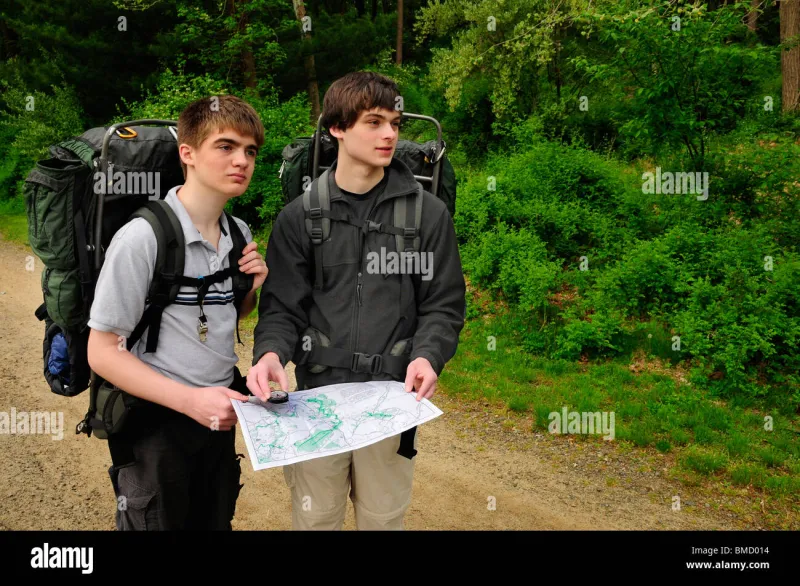
Or the 12-year-old from outside Chicago who cried on day three because his tent stake setup failed and his shelter flooded overnight. His counselor didn't fix it for him. They sat together in the morning, talked through what went wrong, and he rebuilt it. By the end of the session, he was the one teaching the newer campers how to read the ground for drainage.
These stories aren't extraordinary. They're ordinary — which is exactly the point. The northern camp environment produces them constantly, quietly, without fanfare.
The Role of Counselors: Guides, Not Rescuers
None of this works without the right adult presence. The most effective camp counselors in northern programs understand a counterintuitive truth: their job is not to prevent struggle. It's to hold the space around it.
This means letting a kid sit with frustration a little longer than feels comfortable. It means asking "what do you think went wrong?" before offering an explanation. It means celebrating the attempt as loudly as the achievement.
It also means knowing when to step in. There's a difference between productive struggle and a situation that's genuinely unsafe or overwhelming. Good northern camp counselors develop an instinct for that line — and staying on the right side of it is what makes the whole system work. Kids feel safe enough to take risks precisely because they trust the adults around them aren't going to let things go sideways in a way that causes real harm.
That combination — genuine challenge, genuine safety — is harder to find than it sounds. It's one of the things northern wilderness camps do better than almost any other youth environment in the country.
The Transfer Effect: What Comes Home With Them
Here's the part parents care most about: does any of this actually stick once the kid gets back to real life?
The research suggests yes — and the mechanism makes sense. When a child has a lived, embodied experience of failing and recovering, they build what psychologists call self-efficacy: a genuine belief in their own ability to handle difficulty. That belief doesn't stay at camp. It travels home in their backpack.
Teachers and parents who've sent kids to northern wilderness programs consistently report the same observations after a summer away. The kid who used to melt down over a bad grade starts shrugging it off and asking what to study differently. The teenager who avoided tryouts because she was afraid of rejection signs up anyway. The kid who wouldn't speak up in group projects starts running them.
None of these changes are dramatic or overnight. But they're real, and they compound. A kid who learns to fail well at 13 is a teenager who takes healthy academic risks at 16, and a young adult who doesn't fall apart when a job interview goes badly at 22.
One Summer Is Enough to Shift the Story
Parents sometimes ask whether one summer is really enough to make a difference. It's a fair question. The answer, based on both research and the lived experience of camp communities across the northern US and Canada, is a clear yes — with one caveat.
One summer is enough to start the shift. It plants something. The kid who comes home having survived a flooded tent and a failed navigation and a group conflict that got messy before it got resolved — that kid has new evidence about who they are. They've updated their internal story.
Whether that story keeps growing depends on what comes next. More summers help. So do parents who reinforce the same message at home: failure is data, not identity. Effort matters more than outcome. Hard things are worth trying.
But you have to start somewhere. And there are few better starting points than a summer under the northern sky, where the weather doesn't care about your GPA and the trail doesn't grade on a curve — and somehow, that's exactly what makes it worth everything.