Why Sleeping Under a Northern Sky Is the Best Thing That Could Happen to Your Teenager's Brain

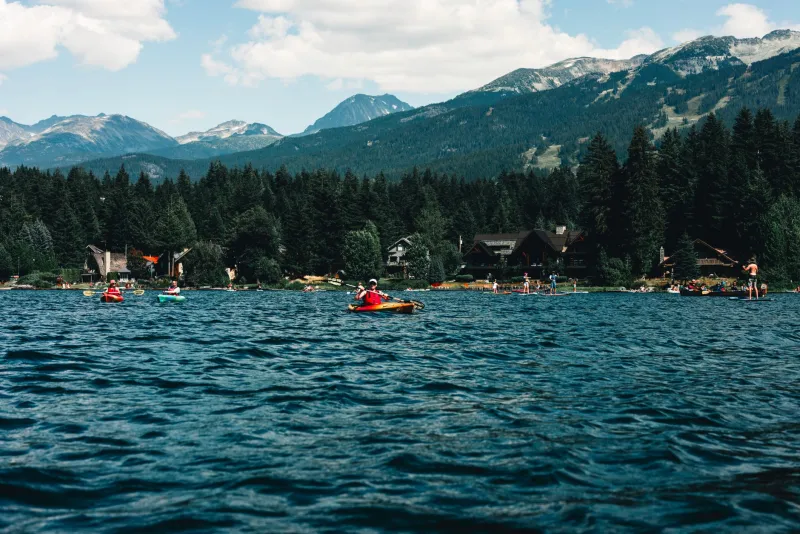
Photo by Photo by Jonatan Pie on Unsplash on Unsplash
Your teenager probably isn't sleeping well. That's not a parenting opinion — it's a public health fact. The American Academy of Pediatrics has flagged adolescent sleep deprivation as a genuine crisis, with the average American teen clocking somewhere between six and seven hours a night when their developing brain needs closer to nine. Sleep apps, melatonin gummies, blue-light glasses — parents have tried everything. But what if the most effective fix wasn't a product at all? What if it was a sky?
At Camp North End, we've watched something remarkable happen to kids over and over again during the first week of a northern summer session. The bleary-eyed, phone-addicted teenagers who stumble off the bus from cities like Chicago, Atlanta, and Denver — the ones who can barely string a sentence together before noon — start waking up alert. Genuinely alert. By day ten, some of them are up before staff. Here's the science behind why.
The Modern Teen Sleep Problem Isn't Laziness — It's Light
To understand why the North fixes what screens break, you have to understand what sleep actually runs on. Your body's internal clock — the circadian rhythm — is governed almost entirely by light. Specifically, it responds to the spectrum and intensity of light hitting your retinas at different times of day. Morning light triggers cortisol and signals wakefulness. Fading evening light prompts melatonin production, which eases you toward sleep.
Smartphones, tablets, and LED screens emit light in the blue-spectrum range that closely mimics morning sunlight. When a teenager scrolls TikTok at 11 p.m., their brain genuinely cannot tell the difference between that glow and a sunrise. Melatonin gets suppressed. The sleep signal never fires. Bedtime shifts later and later in a phenomenon sleep researchers call "social jet lag" — a mismatch between biological sleep timing and the demands of school schedules.
Dr. Charles Czeisler at Harvard's Division of Sleep Medicine has spent decades documenting how artificial light at night delays adolescent circadian phase. The result isn't just tiredness. Chronic sleep disruption in teenagers is linked to higher rates of anxiety, depression, impaired memory consolidation, and reduced emotional regulation. This is the baseline most American teens are operating from when they arrive at camp.
What Happens When You Hand a Teenager Back to the Sun
Northern latitudes do something extraordinary to light. In summer, the sun follows a dramatically different arc across the sky than it does in the continental United States. At certain northern locations, true darkness never fully arrives — what's known as the "midnight sun" effect means the sky transitions through long golden hours of twilight rather than snapping to black. Even where darkness does fall, it comes late and lifts early.
For a sleep-disrupted teenager, this is a full system recalibration.
Research published in the journal Current Biology by University of Colorado sleep scientist Dr. Kenneth Wright showed that just one week of camping without artificial light exposure — relying entirely on sunlight and firelight — shifted participants' circadian clocks significantly earlier. Melatonin onset moved up by nearly two hours. People fell asleep earlier, woke more naturally, and reported feeling genuinely rested. The effects were most dramatic in self-described "night owls" — which, not coincidentally, describes the majority of American teenagers.
The northern camp environment amplifies this effect in a specific way. The extended golden-hour light of northern evenings — warm, amber, low-angle — is processed very differently by the brain than the harsh blue-white light of screens. It signals "wind down" without signaling "sleep," which means campers can stay meaningfully active around the fire, watching for aurora or finishing a conversation, while their melatonin quietly begins to rise in the background.
The Aurora Factor: Darkness That Actually Feels Worth Staying Up For
Here's where it gets interesting. Northern camps that run into late summer or early fall introduce teenagers to something that no sleep researcher has figured out how to replicate in a lab: the aurora borealis.
Staying up to watch the northern lights is one of the most commonly cited transformative experiences among Camp North End alumni. But beyond its obvious wonder, aurora viewing creates a sleep dynamic that is genuinely unusual. Campers willingly go to bed earlier — because they want to wake up at 2 a.m. when the aurora peaks. They set internal alarms. They sleep with intention.
This matters more than it sounds. Sleep scientists describe "sleep motivation" as one of the hardest things to cultivate in adolescents. Teenagers in suburban America have almost no reason to go to bed at a reasonable hour and no natural reward for waking up early. The aurora flips that script completely. The sky becomes the incentive. The darkness becomes something to look forward to rather than scroll through.
Campers who chase aurora for a week or two develop what sleep researchers might call "chronotype flexibility" — the ability to shift sleep timing based on environmental cues and personal goals rather than being rigidly locked into a late-night pattern.
No App Can Replicate This
The sleep supplement and wellness app industry is a multi-billion-dollar business built largely on the promise of better teen sleep. And while some interventions have modest supporting evidence, none of them address the root cause: a fundamental mismatch between the artificial light environment modern teenagers inhabit and the natural light cues their biology was built to respond to.
You cannot supplement your way out of a broken light environment. You can, however, temporarily replace it.
Parents who send their kids to Camp North End for a summer session consistently report the same thing: their teenager comes home sleeping better. Not just for a week — the shift tends to persist into the school year, particularly if the family makes modest adjustments like dimming lights in the evening and getting outside in the morning. The northern camp experience essentially gives the circadian system a hard reset, and it turns out that system is remarkably good at maintaining a healthier rhythm once it's been properly calibrated.
What This Means for Your Kid This Summer
If your teenager is chronically tired, moody, and glued to a device until midnight, there's a good chance no amount of conversation about screen time is going to move the needle. Their biology is working against them, and biology is stubborn.
What actually works is a change of environment — one dramatic enough to override the signals they've been receiving for months. The North provides that. Long golden evenings, cool air, physical activity, firelight, and on a lucky night, a curtain of green and violet light rippling across the sky at midnight.
That's not a sleep supplement. That's the real thing. And under the northern sky, it's available every single summer.