Frozen, Soaked, and Stronger for It: What Harsh Northern Weather Actually Does to a Kid's Brain

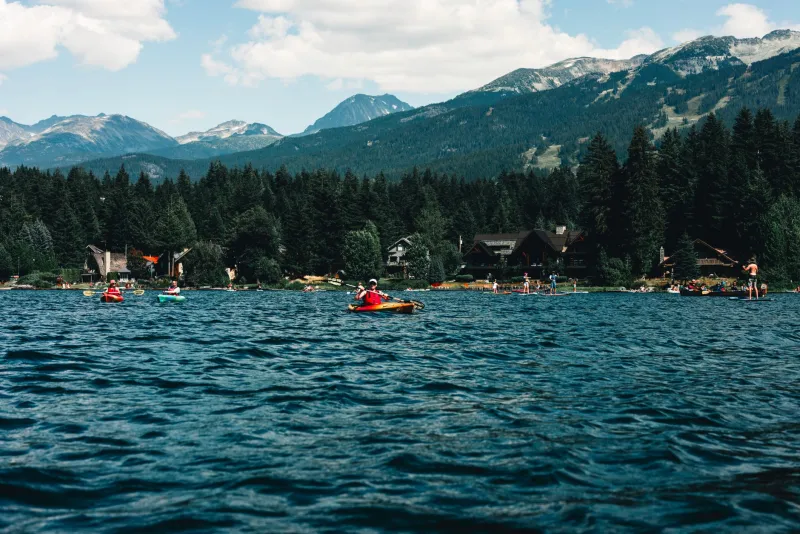
Photo by Photo by Hanna Lazar on Unsplash on Unsplash
Somewhere between the first unexpected snowstorm of the season and the moment a kid realizes their rain jacket isn't quite waterproof enough, something shifts. It's subtle, and it doesn't show up on any report card. But ask a pediatric psychologist, a wilderness educator, or a parent who's watched their child come home from a northern summer camp a little weathered and a lot more confident — they'll all tell you the same thing. Discomfort, when it's age-appropriate and supported, is one of the most underrated teachers in a child's life.
And in the north, discomfort shows up reliably.
The Predictability Problem in Modern Childhood
Here's the uncomfortable truth about a lot of American childhoods right now: they're extraordinarily comfortable. Climate-controlled homes, temperature-regulated classrooms, screen-based entertainment that requires nothing physically demanding — kids today are largely insulated from the kind of environmental unpredictability that used to be a normal part of growing up.
That insulation has real costs. Dr. Stuart Brown, a researcher who spent decades studying the neuroscience of play, has written extensively about how children develop adaptive thinking through unstructured, physically challenging experiences. When the environment is always predictable, the brain simply doesn't get the same workout.
Northern climates break that pattern fast. A morning that starts at 50°F can drop into the 30s by afternoon. A clear sky at breakfast can turn into a sideways sleet situation by lunch. Kids who spend significant time outdoors in northern environments — whether at a wilderness camp, on a family camping trip, or simply growing up in a northern state — learn early that the world doesn't always cooperate with their plans.
That lesson, it turns out, is genuinely formative.
What Extreme Weather Teaches That a Classroom Can't
Researchers at the University of Minnesota studying outdoor education programs found that children who regularly engaged with challenging natural environments showed measurably stronger executive function skills than peers in more controlled settings. Executive function — the cognitive toolkit that includes planning, impulse control, and flexible thinking — is widely considered one of the strongest predictors of long-term success, more reliable than IQ scores in many longitudinal studies.
When a kid is halfway through a canoe route and the sky goes dark and the wind picks up, they're not running a classroom exercise. They're making real decisions with real stakes. Do we paddle harder for the far shore? Do we find a cove and wait it out? Who has the emergency kit? What did the counselor say about reading cloud formations?
That kind of problem-solving is visceral. It sticks.
Pediatric psychologist Dr. Wendy Mogel, whose work on raising resilient children has been widely cited in US parenting circles, argues that children need what she calls "vitamin N" — nature — specifically because it introduces genuine uncertainty. You can't negotiate with a cold front. You can't talk a blizzard into giving you five more minutes. Northern weather, in particular, serves up this kind of inarguable reality check on a regular basis.
Temperature Swings and Emotional Regulation
There's a physiological angle here that doesn't get enough attention. Exposure to cold — real cold, not just a slightly chilly air-conditioned room — activates the body's stress response systems in ways that, over time, build a more regulated nervous system.
Research from Scandinavia, where outdoor preschool programs have operated for decades, shows that children who spend extended time in cold outdoor environments develop stronger vagal tone — essentially, a more resilient autonomic nervous system. Better vagal tone is associated with improved emotional regulation, reduced anxiety responses, and a greater capacity to recover from stress.
In plain terms: kids who get cold and learn to manage it tend to be better at managing other uncomfortable feelings too.
At Camp North End, we see this play out every single session. A camper who arrives in June having never spent a night below 60°F is often the same kid who, by late July, is the one calmly helping a tentmate find their headlamp during a 3 a.m. thunderstorm. The temperature didn't toughen them in a harsh or punitive way — it gave them evidence that they could handle hard things.
That evidence is everything.
The Confidence That Comes From Weathering Something Real
There's a particular kind of confidence that only comes from having genuinely struggled and gotten through it. Psychologists call it "self-efficacy" — the belief, built from direct experience, that you are capable of handling challenges. It's different from the kind of confidence that comes from praise or participation trophies. It's earned, and kids know the difference.
Northern weather is one of the most reliable generators of that earned confidence available to young people. When a 12-year-old hikes six miles in cold rain and makes it back to camp, they don't just feel proud — they have actual data about themselves. They know something about their own capacity that they didn't know before.
Parents who've sent kids to northern wilderness programs consistently report this shift. The child who came home is recognizably the same person, but there's something different in how they carry themselves. A little less anxious about the unknown. A little more willing to try things that might not work out.
Seasonal Darkness: The Overlooked Teacher
Beyond temperature and storms, northern climates offer another environmental variable that rarely gets credit: the dramatic shift in daylight across seasons. For camps and programs running into fall, or families living in northern states year-round, the shortening days of late summer and early autumn introduce kids to a different kind of environmental challenge — one that's psychological rather than physical.
Learning to stay energized, motivated, and socially connected when daylight shrinks is a skill. It requires intention, routine, and a certain adaptability. Research on seasonal affective patterns in children suggests that kids who grow up with strategies for managing low-light seasons — outdoor time, physical activity, strong social bonds — are significantly less vulnerable to seasonal mood disruption as adults.
In other words, the north doesn't just build physical resilience. It builds emotional and psychological resilience too.
Raising Kids Who Can Handle What Comes
None of this is an argument for throwing kids into dangerous situations and hoping for the best. The research is clear that the benefits of challenging environments depend heavily on the presence of supportive adults, age-appropriate risk, and the opportunity to debrief and make meaning from difficult experiences.
What northern wilderness programs do well — and what northern family camping experiences can offer — is exactly that combination. The weather provides the challenge. The community provides the support. And the result is a kid who knows, in their bones, that they can handle what comes.
In a world that often tries very hard to remove uncertainty from children's lives, that might be the most valuable thing we can give them.