10 Wilderness Skills Northern Camps Teach That Will Actually Matter in College
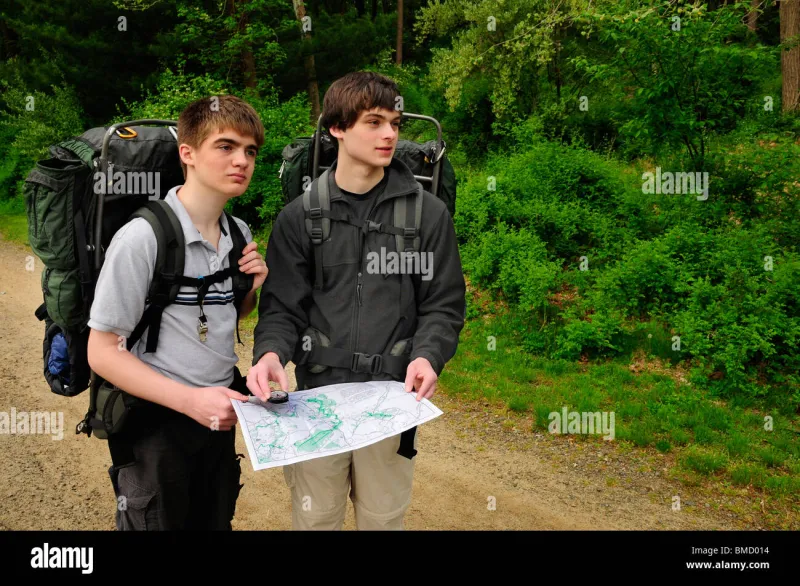
Photo: teenage hikers navigating with map and compass in northern forest, via c8.alamy.com
Every August, millions of American teens pack up and head to college for the first time. They've got laptops, dorm decor from Target, and maybe a few semesters of AP credits under their belts. What most of them don't have? The ability to stay calm when things go sideways, solve problems without Googling the answer, or cook a meal that doesn't involve a microwave.
That's where a summer at a northern wilderness camp changes the equation.
At Camp North End, we've watched hundreds of teenagers arrive nervous and leave transformed—not because we gave them a trophy or a certificate, but because we handed them real challenges and let them figure it out. Here's a look at the skills that stick long after the campfire smoke clears.
1. Navigating Without a Signal
When you're deep in the northern boreal forest and your phone has zero bars, a downloaded playlist isn't going to save you—but a topographic map and a compass will. Learning to read terrain, identify landmarks, and trust your own spatial reasoning is one of the most grounding experiences a teenager can have. Bonus: those same orientation skills come in handy when you're trying to find your 8 a.m. lecture hall on a 40,000-student campus.
2. Assessing Risk Before Acting
Northern wilderness environments don't forgive impulsive decisions. Crossing a stream, reading weather patterns, choosing a campsite—each requires teens to slow down, gather information, and weigh consequences. That deliberate decision-making muscle gets used constantly in college, whether they're choosing a roommate situation or navigating a sketchy social scenario.
3. Campfire Cooking From Scratch
Forget meal swipes and late-night delivery apps. Teens who've cooked a full backcountry meal over an open flame—managing heat, timing multiple components, and cleaning up after—approach cooking with genuine competence. It's also one of the most social skills imaginable. There's something about feeding other people that builds real community, and that translates directly to dorm life.
4. Emergency First Aid Basics
From blister care to recognizing signs of hypothermia, wilderness first aid training gives teens a framework for handling medical situations without panicking. At Camp North End, our counselors walk teens through practical scenarios so the knowledge is experiential, not just theoretical. Knowing what to do when someone gets hurt is one of the most empowering things a young person can carry into adulthood.
5. Weather Awareness and Pattern Reading
Northern summers are unpredictable. A clear morning can turn into a thunderstorm by afternoon. Learning to read cloud formations, wind shifts, and barometric pressure changes teaches teens to pay attention to their environment rather than operating in a bubble. That kind of situational awareness is rare—and incredibly valuable.
6. Leave No Trace Ethics
Leave No Trace isn't just a catchy phrase. It's a complete philosophy about how humans interact with shared spaces. Teens who internalize these principles—pack it in, pack it out; minimize impact; respect wildlife—tend to apply that same ethic to shared living situations, communal kitchens, and public spaces. It's essentially the outdoor version of being a considerate neighbor.
7. Building and Sustaining a Fire Safely
Fire-building sounds basic, but doing it responsibly—selecting the right site, managing fuel, extinguishing it completely—requires patience and attention to detail. It also happens to be one of the most satisfying accomplishments for teens who've grown up in a world of instant gratification. There's no shortcut. You either build a fire or you don't.
8. Group Problem-Solving Under Pressure
Every northern expedition eventually hits a snag: a wrong turn, unexpected weather, a piece of gear that fails. Working through those moments as a group—communicating clearly, listening to different perspectives, and staying solution-focused—is exactly the kind of collaborative skill that employers and professors constantly say young adults are missing. Wilderness camps teach it naturally, without a single team-building worksheet.
9. Managing Discomfort Without Quitting
Cold mornings, sore legs, mosquitoes, and rain. Northern camp life comes with discomfort, and that's entirely the point. Teens learn that physical and emotional discomfort is temporary, manageable, and sometimes even a sign they're growing. That resilience—the ability to push through rather than opt out—is arguably the most transferable skill on this entire list.
10. Self-Sufficiency in Daily Routines
At Camp North End, teens are responsible for their gear, their schedules, and their own preparedness. Packing a dry bag correctly, maintaining a water filter, keeping track of personal medication—these aren't dramatic survival moments, but they add up to a teenager who knows how to take care of themselves. College RAs will thank us.
Why the North Makes the Difference
There's something specific about the northern wilderness environment that accelerates this kind of growth. Extended daylight hours mean more time in the field. The relative remoteness means decisions carry real weight. And the sheer scale of the landscape—the boreal forests, the lakes, the open sky—has a way of putting teenage anxieties in perspective.
We're not saying a summer at Camp North End replaces college prep. We're saying it builds the foundation that makes everything else easier. The teen who knows how to navigate uncertainty, collaborate under pressure, and take care of themselves and others? That kid is ready for whatever comes next.
And honestly? They're probably going to be a lot more fun at the freshman cookout, too.