Tougher for Life: The Long Game of Sending Your Kid North for the Summer
When Maya Rodriguez dropped her daughter off at a northern wilderness camp for the first time, she expected bug bites, a few postcards, and maybe some new friendships. What she didn't expect was a phone call two years later — her daughter, now a college sophomore, calmly describing how she'd talked her roommate through a panic attack at 2 a.m. "She said, 'Mom, I've been in worse situations. I just knew what to do.'" Maya paused telling that story. "I think that's when I understood what camp actually gave her."
That kind of quiet, durable confidence is hard to manufacture. But researchers, counselors, and a growing body of alumni testimony suggest that northern wilderness camp environments are unusually good at producing it — not as a side effect, but almost as an inevitability.
It's Not Just Camp. It's the North.
Plenty of summer camps build community and teach teamwork. But there's something particular about the northern wilderness setting that turns up the dial on personal development in ways that more temperate environments simply can't replicate.
Start with the daylight. In northern latitudes during summer, the sun barely sets. Kids are operating in 18, sometimes 20 hours of usable light. That sounds like a perk, but it actually disrupts the comfortable rhythms teenagers rely on. Sleep schedules shift. The familiar cues that tell your brain "the day is over" disappear. Learning to regulate your own energy, your own mood, your own readiness for the next challenge — without external structure doing it for you — is a skill most adults spend decades trying to develop. Camp North End campers are doing it at 14.
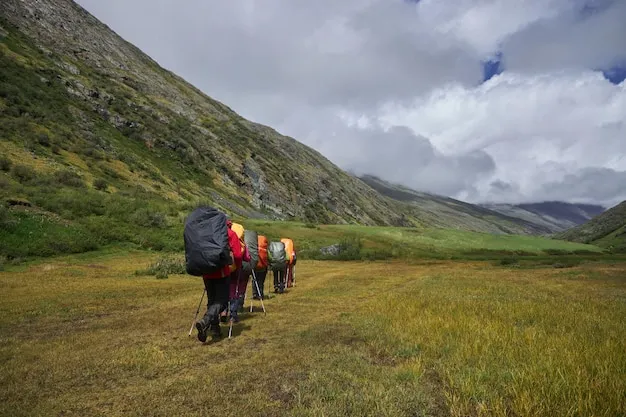
Then there's the weather. Northern summers are not the warm, predictable sunshine of a Florida vacation. A morning hike can start in 65-degree sunshine and end in a 45-degree downpour. Trip leaders don't cancel plans because the forecast looks rough — they teach kids to adapt, repack, and push through. Psychologists call this "stress inoculation," the gradual, controlled exposure to manageable adversity that trains the nervous system to handle bigger challenges without shutting down.
Dr. Peter Gray, a developmental psychologist at Boston College who has studied free play and outdoor risk in children, has written extensively about how children who regularly navigate real environmental uncertainty develop what he calls "flexible coping" — the ability to switch strategies mid-problem rather than freezing or catastrophizing. Northern wilderness camp is essentially a semester-long practicum in flexible coping.
What the Research Actually Says
A 2018 study published in the Journal of Experiential Education tracked participants from wilderness-based youth programs over a five-year period. The findings were striking: alumni consistently rated themselves higher on measures of emotional regulation, tolerance for ambiguity, and self-efficacy than peers who hadn't participated in similar programs. More importantly, those traits held. They didn't fade after a year or two back in regular life. The researchers concluded that immersive outdoor challenge experiences — particularly those involving genuine unpredictability — create lasting neurological and behavioral change.
A separate longitudinal study from the American Camp Association found that camp alumni were significantly more likely to report strong problem-solving confidence in professional settings, and more likely to describe themselves as "comfortable with uncertainty" in their personal lives. That's not a small thing. Comfort with uncertainty is arguably the defining skill of the modern workforce.
What makes the northern piece so relevant here is the intensity of the variables. Isolation from urban infrastructure — no DoorDash, no cell service, no quick fix if something goes wrong — forces kids to become genuinely resourceful. When a camp group is three miles from base and someone twists an ankle, there's no calling an Uber. There's problem-solving, teamwork, and the realization that you are more capable than you thought.
Alumni Voices: Years Later, the North Still Shows Up
Talk to Camp North End alumni long enough and a pattern emerges. The stories aren't usually about dramatic rescues or survival situations. They're quieter than that.
Jared, now 28 and working as an emergency room nurse in Minneapolis, says the thing he thinks about most is a solo night he spent in the northern woods at 16 — no counselor, a small fire, and nothing but his own thoughts for company. "I was terrified for about an hour," he says. "Then something clicked. I realized I was fine. The fear was just... noise. I use that every single shift."
Dana, 32, runs a small business in Denver and credits her northern camp summers with her ability to stay calm when a deal falls apart or a supplier ghosts her. "You learn up there that bad conditions aren't the end of the plan. They're just part of the plan. You adjust."
These aren't outliers. Ask almost any long-term camp alum to trace the roots of their resilience, and they'll eventually land on a specific moment in the northern wilderness — a storm they weathered, a challenge they almost quit, a night they got through alone. Those moments become internal reference points. Adult life gets hard, and the brain quietly says: I've been harder places. I know how this goes.
What Parents Can Do With This Information
None of this means shipping your kid north for a summer and expecting them to return a finished product. Resilience isn't a single download. It builds through repeated exposure, reflection, and — importantly — supportive adults who let kids struggle without immediately rescuing them.
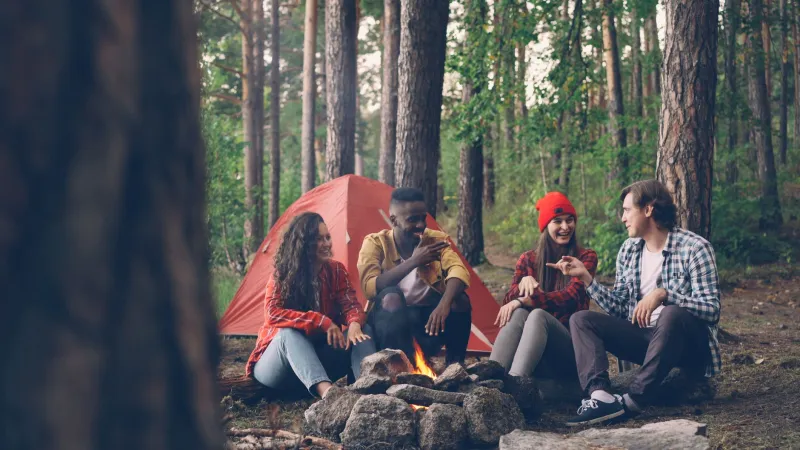
The best northern wilderness camps build that reflection time in deliberately. Campfire discussions, journaling, one-on-one check-ins with counselors — these aren't soft additions to the "real" outdoor programming. They're the processing layer that turns experience into growth. Without it, a hard week in the woods is just a hard week in the woods.
If you're considering a northern camp experience for your kid, ask programs how they handle failure. Ask what happens when a camper wants to quit. Ask how they balance challenge with support. The answers will tell you a lot about whether the program is genuinely invested in long-term development or just putting kids through impressive-looking activities.
The Slow Burn of a Northern Summer
Resilience isn't loud. It doesn't show up on a report card or a highlight reel. It shows up at 2 a.m. in a college dorm room when a roommate is struggling and your kid knows what to do. It shows up in a job interview when the questions get hard and your young adult doesn't flinch. It shows up in a marriage, a friendship, a career — in every moment when life gets unpredictable and someone has to stay steady.
The northern wilderness doesn't promise to build that. But it creates the conditions where it almost can't help but grow. The extended daylight, the weather that doesn't negotiate, the distance from every comfort and convenience — these aren't bugs in the northern camp experience. They're the whole point.
Send them north. The long game is worth it.