Skip the Roller Coasters: Why a Northern Wilderness Camp Beats Any Theme Park Vacation
Every summer, millions of American families face the same question: where do we take the kids? The default answer is often a theme park — a week of overpriced funnel cake, 90-minute queue times, and a photo with a costumed character that nobody really needed. And look, there's nothing wrong with that. Theme parks are fun. But fun and formative are two very different things.
An increasing number of families are discovering what camp directors across Alaska, Minnesota, and Canada have known for decades: a summer spent in the remote northern wilderness doesn't just entertain kids — it genuinely changes them. And the research is starting to catch up with what the campfire crowd has always believed.
The Comfort Zone Is Overrated
Dr. Renee Clausson, a child psychologist based in Minneapolis who works closely with outdoor youth programs, puts it plainly: "Theme parks are engineered to remove every point of friction. Northern wilderness camps do the opposite — they introduce manageable challenges in a safe environment, and that's exactly where growth happens."
That friction looks different depending on the program. It might be a 12-year-old from suburban Ohio learning to read a topographic map on a foggy morning in the Boundary Waters. It might be a cabin group problem-solving their way through a capsized canoe drill on a cold northern lake. It might simply be going three weeks without a smartphone and realizing the world didn't end.
Theme parks optimize for comfort. The best northern wilderness camps optimize for capability — and those are fundamentally different goals.
What the Research Actually Says
A 2022 study published in the Journal of Experiential Education found that adolescents who participated in multi-week wilderness programs showed measurable improvements in self-efficacy, emotional regulation, and problem-solving confidence compared to control groups. These weren't vague, feel-good outcomes. Researchers tracked specific behavioral markers before, during, and after the programs.
Meanwhile, the American Camp Association has consistently reported that kids who attend overnight camps — particularly those with a strong outdoor or wilderness component — return home with stronger social skills, greater independence, and higher resilience scores than their peers.
None of this surprises Marcus Treadwell, who has directed a wilderness camp program in northern Minnesota for 17 years. "I've watched kids arrive who can't make a decision without checking with a parent first. Six weeks later, they're leading a group through a portage trail in the rain and keeping morale up while doing it. You can't manufacture that at a water park."
The Northern Environment Is the Teacher
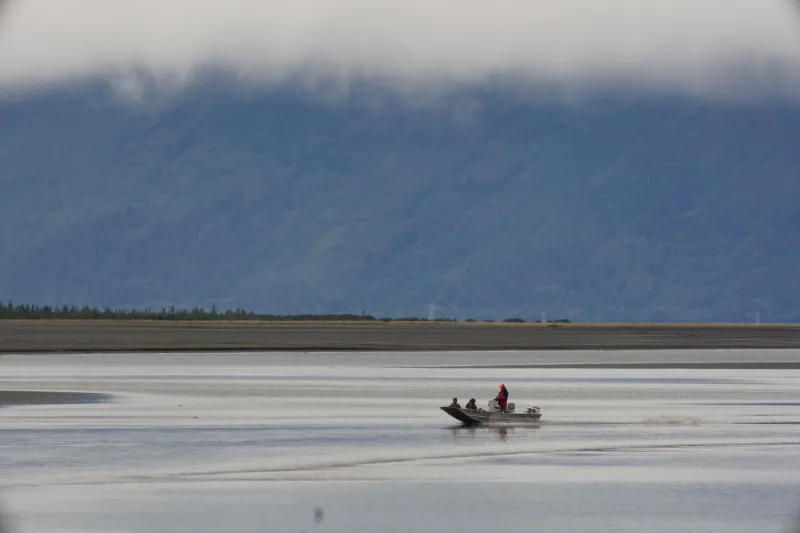
There's something specific about the northern landscape that accelerates this process. The subarctic and boreal regions of Alaska, Canada, and the upper Midwest present a genuinely humbling environment — one that doesn't care how many Instagram followers you have or what your GPA is. A midnight sky that refuses to darken, a wilderness that stretches past the horizon in every direction, wildlife that operates on its own schedule entirely — these things recalibrate a young person's sense of scale and self in a way that's hard to replicate anywhere else.
Janet Kowalski, a camp director with a program operating out of Yukon, Canada, describes it this way: "The north has a way of stripping away the social performance that teenagers are constantly engaged in. Out here, what matters is whether you can pull your weight for the group. Kids figure that out fast, and they love it — even when it's hard."
The extended daylight of northern summers plays its own role too. When the sun barely sets, the rhythm of daily life shifts. Kids stay active longer, sleep becomes a conscious choice rather than a default, and the boundary between day and night becomes something you navigate rather than something that happens to you. It's a small thing, but it's one more layer of agency.
Real Skills vs. Simulated Thrills
Here's the honest comparison: a theme park gives your kid a simulated experience of danger — a roller coaster that feels terrifying but is statistically safer than the parking lot you walked through to get there. A northern wilderness camp gives your kid real skills in a genuinely unfamiliar environment, with trained staff who know how to let kids struggle productively without letting them fail dangerously.
By the end of a summer program in the north, a kid might know how to:
- Navigate by compass and map in low-visibility conditions
- Identify edible and medicinal plants native to the boreal forest
- Set up a weatherproof campsite in under an hour
- Manage a group conflict without adult intervention
- Catch, clean, and cook a fish for dinner
None of those skills fit on a souvenir magnet. But every single one of them builds the kind of quiet, earned confidence that follows a kid into high school, college, and beyond.
"But My Kid Won't Want to Go"
This is the most common pushback, and it's fair. A lot of kids — especially teenagers — will initially resist the idea of spending weeks without WiFi in a place where bears are a real consideration. Treadwell hears this from parents constantly.
"Nine times out of ten, those are the same kids who don't want to leave at the end of the summer," he says. "The resistance at the start is normal. It's part of the process. What they find up here is that they're more capable than they thought, and that's addictive in the best possible way."
The northern wilderness has a way of converting skeptics. The landscape is too dramatic, the experiences too immediate, the friendships too real for cynicism to last very long.
The Bottom Line
Theme parks will always have their place. They're a perfectly fine way to spend a few days as a family. But if you're looking for a summer experience that your kid will still be talking about at 35 — one that shapes how they handle adversity, builds genuine self-reliance, and gives them a relationship with the natural world that lasts a lifetime — the northern wilderness camp isn't just a good alternative to a theme park vacation.
It's in a completely different category.
The roller coasters will still be there next summer. The question is whether your kid will be ready to lead something real when it matters.