Paddle, Navigate, Survive: How a Multi-Day Canoe Expedition Quietly Rewires a Kid's Confidence
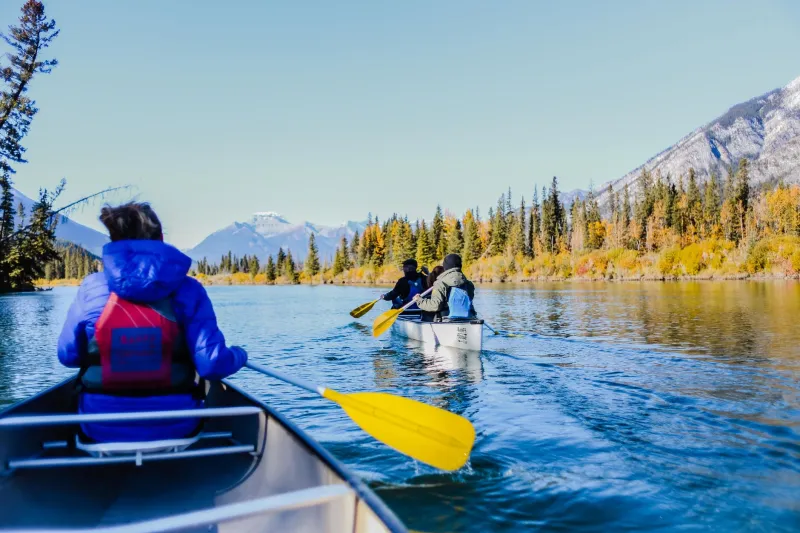
Ask any adult who paddled a remote northern water trail as a teenager, and they'll tell you the same thing: they remember almost every mile of it. Not in a vague, nostalgic way — they remember specific things. The bend in the river where the current surprised them. The portage that nearly broke the group. The evening they made camp on a granite slab as the sky turned colors that had no business existing in the real world. These memories don't fade because they weren't passive. Every single one of them was earned.
That's the thing about a multi-day canoe expedition in the northern wilderness. It isn't a ride. It's a responsibility.
The Map Is Yours Now
One of the first things a kid discovers on a paddling expedition is that someone has to be in charge of where the group is going — and eventually, that someone is them. Route-finding on open water in remote northern terrain isn't like following a trail with blazes every hundred yards. You're reading topo maps, identifying shoreline features, tracking your position relative to islands and inlets, and making judgment calls in real time.
For most kids, this is the first time in their lives they've held that kind of navigational authority. Parents aren't there to double-check the GPS. There's no phone signal to bail them out. The map is theirs, the compass is theirs, and the decision is theirs.
Psychologists who study adolescent development talk a lot about autonomy support — the idea that young people grow in confidence not when adults take over, but when adults step back and let kids experience the direct consequences of their own thinking. A canoe route does this automatically. The wilderness doesn't negotiate. If you misread the map, you end up paddling into a dead-end bay. If you read it right, you arrive at camp before the rain hits. The feedback is immediate, honest, and completely fair.
What Weather Does to a Team
Northern weather is famously indifferent to anyone's plans. A morning that starts calm and glassy can turn into whitecaps and headwinds by noon. Thunderstorms build fast over open lakes. Cold fronts roll through without warning.
For a group of kids in canoes, weather isn't an inconvenience — it's a problem that requires actual decision-making. Do you push across the exposed stretch of open water before the wind picks up, or do you hug the shoreline and add two hours to the day? Do you make camp early and wait it out, or do you trust that the clouds are moving through?
These aren't hypothetical scenarios in a classroom. These are real calls with real stakes, and kids rise to them in ways that consistently surprise the adults watching from the shore.
What's happening underneath all that paddling and weather-watching is something developmental researchers call stress inoculation — repeated, manageable exposure to challenge that builds a person's capacity to handle uncertainty without falling apart. Kids who've navigated a northern water trail in variable weather have, without realizing it, trained themselves to stay calm when conditions change. That skill follows them into high school, college, careers, and relationships for the rest of their lives.
The Quiet Kind of Confidence
There's loud confidence — the kind that performs for an audience. And then there's the quieter kind, the kind that doesn't need anyone to notice it. Multi-day paddling expeditions tend to build the second type.
Here's why: the wilderness doesn't applaud. When a kid successfully navigates a tricky section of river or makes a smart call about where to camp, there's no crowd, no scoreboard, no coach blowing a whistle in celebration. There's just the knowledge that it worked. That internal validation — the private recognition that I figured that out — is a fundamentally different experience than being praised by an adult or winning a competition.
Kids who spend a week or more paddling remote northern waterways come home with something that's hard to put your finger on at first. They're a little quieter, maybe. A little less reactive. They don't need to prove themselves the way they did before. Parents often describe it as a kind of settledness — like something clicked into place that wasn't quite there before.
That's not accidental. That's what happens when a young person discovers, through direct experience, that they're more capable than they thought.
Team Dynamics on Open Water
A canoe is a two-person boat. Or sometimes three. Either way, you are physically tethered to at least one other human being for the duration of the paddling day. You have to communicate. You have to compromise. You have to figure out how to keep moving forward when the person in the bow wants to stop and the person in the stern thinks you've got another hour in you.
Multi-day expeditions compress team dynamics in a way that no ropes course or group project ever does. By day four, every participant knows exactly how each person in the group responds to exhaustion, frustration, and fear. They've seen each other at their worst and helped each other through it. Those relationships tend to be unusually durable — the kind of friendships that survive distance and years.
But beyond the social bonds, there's something more transferable happening: kids are learning how to function as part of a working team under actual pressure. Not simulated pressure. Not a timed exercise. Real pressure, in real wilderness, with real consequences if the group falls apart.
Why the North, Specifically
Any canoe trip offers some of this. But there's a reason northern water trails — the kind that wind through boreal forest, across open lakes, and down rivers that haven't changed in a thousand years — deliver it more completely than most.
The scale is different up here. The remoteness is genuine. When you're two days' paddle from the nearest road, the wilderness isn't backdrop — it's the whole world. That immersion does something to a kid's relationship with themselves and with nature that a weekend trip on a managed river simply can't replicate.
The northern sky helps, too. Long summer days mean more hours on the water, more time to navigate, more chances to make decisions and live with them. There's a rhythm to a full northern paddling day that gets into a kid's bones — the early start, the reading of the water, the pull of the paddle, the satisfaction of making camp somewhere genuinely wild.
What They Carry Home
The canoe route your kid paddles this summer will eventually end. They'll portage the boats out for the last time, load into a vehicle, and start the long trip back to ordinary life — back to school hallways and sports practices and the particular social pressures of being an American teenager.
But something comes with them that didn't exist before.
A sense of direction, in more ways than one. The memory of having been genuinely responsible for something that mattered. The knowledge that they've navigated hard conditions and come out the other side — not because someone rescued them, but because they figured it out.
That's not a small thing to carry into adulthood. That's, quietly, one of the most important things a summer can give a kid.