Why the Friends You Make at a Wilderness Camp Are the Ones You Keep Forever

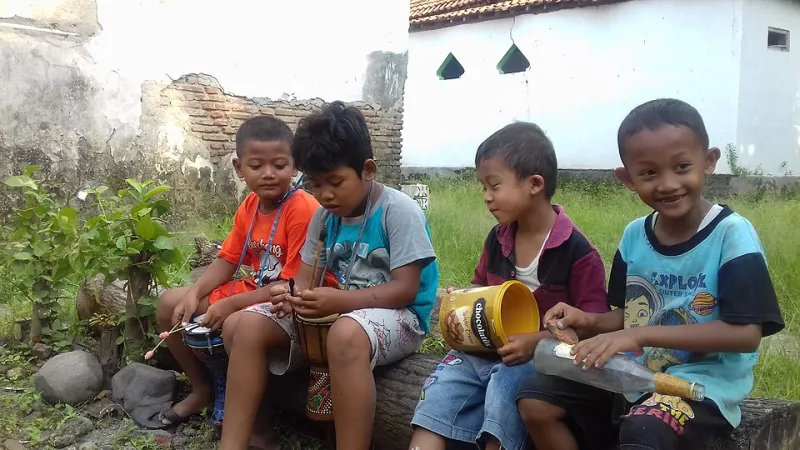
Photo: FEAR, CC BY 3.0, via Wikimedia Commons
Ask a group of adults who attended a northern wilderness camp as kids to describe their closest friendships, and a pattern emerges almost immediately. The names that come up first — the people they'd call in a crisis, the ones they've stayed in touch with across moves and marriages and career changes — are almost always people they met under a canvas tarp in the rain, or while paddling into a headwind, or huddled around a fire at midnight when the temperature dropped faster than anyone expected.
It's not nostalgia. Or rather, it's not only nostalgia. There's a real mechanism behind why camp friendships — specifically the kind forged in remote, challenging, northern outdoor environments — tend to be more durable than the friendships we make almost anywhere else.
The Science of Bonding Under Pressure
Social psychologists have long been interested in what conditions produce the strongest interpersonal bonds. The research consistently points to a few key ingredients: shared challenge, mutual vulnerability, limited outside distraction, and time density — meaning not just how long you spend with someone, but how much actually happens in that time.
Northern wilderness camps stack all four of those ingredients in a way that's genuinely hard to replicate elsewhere.
A 2014 study published in the journal Psychological Science found that people who experienced a stressful situation alongside others reported significantly stronger feelings of closeness and trust toward those people than toward others they'd met in neutral conditions. The researchers called this the "foxhole effect" — the same psychological dynamic that produces intense bonds among soldiers, first responders, and yes, kids who just portaged a canoe through a swamp together for two hours.
When you've seen someone at their most frustrated, their most exhausted, their most genuinely scared — and they've seen the same in you — you skip a layer of social performance that most relationships never get past.
What Northern Environments Add to the Equation
Not all outdoor camps are created equal when it comes to friendship formation. There's something specific about northern wilderness settings that intensifies the bonding process.
First, there's the sheer remoteness. When you're three hours by dirt road from the nearest town, and your phone has been sitting in a cubby since Sunday, the social world shrinks to the people right in front of you. That sounds simple, but its psychological effect is profound. Human attention is a limited resource, and in everyday American life, it's constantly fragmented — by notifications, by social media, by the low-grade background noise of always being reachable. At a northern camp, that fragmentation disappears. The people around you get your full attention, and you get theirs. That kind of sustained, undivided presence is increasingly rare, and it accelerates intimacy in ways that years of texting simply can't.
Second, there's the extended daylight of northern summers. This is an underappreciated factor. When the sun doesn't set until 10 p.m. and the sky is light again by 4 a.m., the social day stretches. Conversations that would have ended at dusk continue. Spontaneous late-night campfire discussions — the kind where people actually say what they think and feel — happen naturally, not as rare exceptions. More waking hours together means more shared experiences, more inside jokes, more of the accumulated texture that makes a friendship feel real.
Third, northern weather is unpredictable in ways that create impromptu bonding moments constantly. A sudden thunderstorm that sends everyone scrambling for the dining hall. A cold snap that has two kids who barely knew each other sharing a sleeping bag liner at 2 a.m. A foggy morning that delays the day's plan and leaves a group of campers sitting on a dock talking for three unscheduled hours. These aren't programmed activities. They're the gaps where real connection happens.
Vulnerability in the Wild
There's a concept in social psychology called "self-disclosure reciprocity" — the idea that when one person reveals something genuine and vulnerable about themselves, the other person tends to respond in kind, and the cycle deepens trust rapidly. Northern wilderness settings are unusually good at triggering this.
When you're genuinely uncomfortable — cold, tired, uncertain about whether you can make it to the next campsite before dark — your social armor comes off. You're not performing. You're just a person trying to get through something hard. And so is everyone around you. That mutual dropping of pretense creates the conditions for real conversation, the kind that 14-year-olds rarely have in their ordinary social lives.
Counselor Sarah M., who met her best friend at a northern Minnesota wilderness camp in 2003 and was a bridesmaid at her wedding eighteen years later, describes it this way: "We were on a canoe trip and she started crying because she was so tired and she missed her mom. I was feeling the exact same way but I hadn't said anything. After that, we just talked like real people. We've been talking like real people ever since."
That story is not unusual. It's almost archetypal among people who've experienced northern wilderness camp friendships.
Why These Bonds Survive the Years
Forming a strong connection at camp is one thing. Maintaining it across the return to ordinary life — different schools, different states, the grinding logistics of adult schedules — is another. So why do northern camp friendships so often survive?
Part of the answer is what psychologists call a "shared narrative" — a story that two or more people own together. When you've done something genuinely hard with someone, you carry that story for life. It becomes a touchstone. "Remember when we capsized on the second day and had to swim to shore in that cold?" is not just a funny memory — it's a piece of shared identity. Research on long-term friendship maintenance consistently finds that couples and friends who share a strong origin story, especially one involving challenge or adventure, report higher relationship satisfaction and longevity.
There's also the matter of who you were when you met. Camp friendships are often formed before the social stratifications of high school solidify, before kids have fully committed to a particular identity or friend group. The connections formed in that window have a kind of purity — they're not based on social status or shared extracurricular activities. They're based on something more fundamental: you liked this person when you were both just trying to figure out how to start a fire in the rain.
Making Space for the Friendships That Matter
At Camp North End, we think a lot about what we're actually building when we put a group of young people in a beautiful, challenging, northern landscape together. The skills matter. The confidence matters. But honestly? The friendships might matter most.
The research backs this up. Loneliness has become a genuine public health concern in the US, particularly among young adults who grew up with more digital connection and less real-world belonging. The antidote isn't more social media followers or a bigger network. It's a handful of people who know the real you — who saw you at your most exhausted and stayed anyway.
That's what the north has always been good at creating. And it's why, decades later, the people who were there tend to find their way back to each other.