What Your Kid Actually Learns at Northern Camp (And Why Their College Roommate Will Thank You)
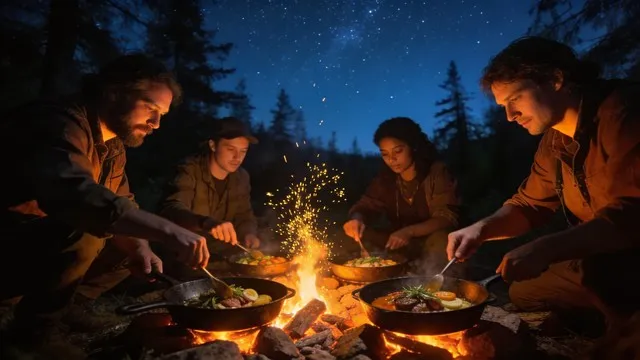
Photo: teenagers cooking over campfire at northern wilderness camp, via images.stockcake.com
Let's be honest about something. When most parents picture summer camp, they're imagining the highlight reel — the zip line photo, the s'mores around the fire, the proud moment when their kid lands a canoe without tipping. That stuff is real and it matters. But at Camp North End, we've come to believe that the most important things happening during a northern summer session are the ones that don't make it onto the brochure.
We're talking about the kid who figures out on day three of a backcountry trip that the group packed enough pasta for four people, not eight — and then quietly works out a rationing plan before anyone else panics. Or the teenager who goes home knowing how to preserve food without refrigeration, manage a shared living space without losing their mind, and cook a genuinely decent meal over a camp stove in 40-degree drizzle.
These are the skills that don't show up on a college application but absolutely show up in a college dorm. Here's a closer look at what's actually being built.
Meal Planning When the Nearest Grocery Store Is 60 Miles Away
Food logistics are one of the first places northern camp life diverges sharply from suburban American reality. When you're preparing for a multi-day canoe trip or a backcountry hiking session in the North, you can't just add things to a cart and have them delivered. You plan based on caloric needs, weight limits, perishability, and group size — and you do it before you leave, because there's no going back.
This turns out to be an extraordinary education in practical math and foresight.
Campers learn to think about food the way their great-grandparents did: as a resource to be managed rather than a service to be accessed. They calculate how many meals a bag of oats covers. They learn which proteins travel without refrigeration. They figure out that cooking for ten people requires fundamentally different proportions than cooking for two — and that if you get it wrong, someone goes to bed hungry.
Melissa T., a parent from Minneapolis whose son attended Camp North End two summers ago, put it plainly: "He came home and actually started helping plan dinners. Not because I asked him to — because he understood for the first time that meals don't just happen. Someone thinks them through. He wanted to be that person."
That shift in perspective — from consumer to contributor — is one of the quieter transformations northern camp produces. And it translates directly to the college dining hall, the first shared apartment, and every potluck for the rest of their life.
Food Preservation and the Lost Art of Not Wasting Anything
In a remote northern setting, waste isn't just inconvenient — it's a problem with real consequences. Campers quickly learn that food left improperly stored attracts wildlife. Food that spoils on day two of a five-day trip creates a genuine caloric shortfall. And in a group living situation, wasting shared resources is a social problem as much as a practical one.
Northern camp introduces kids to food preservation techniques that most American teenagers have never encountered: smoking fish caught from northern lakes, understanding which foraged plants can be dried for trail use, properly sealing food against moisture and animals, and managing a cooler strategically to maximize what stays fresh and for how long.
None of this requires them to become survivalists. What it does is give them an intuitive relationship with food as something finite and valuable — a perspective that pays dividends when they're managing a grocery budget on a college stipend for the first time.
Sharing Space Without Losing Your Mind
Cabin life is a social laboratory that no amount of conflict-resolution curriculum can replicate. Eight people. One shared space. Different sleep schedules, different cleanliness standards, different ideas about what "quiet hours" means.
At Camp North End, we don't solve these tensions for campers. We give them the tools to work through them — and then we watch what happens.
What happens, usually, is negotiation. Compromise. The development of informal house rules that the group actually follows because they built them together. Kids learn to advocate for their own needs without steamrolling someone else's. They learn that shared spaces require shared maintenance, and that the person who cleans the cabin bathroom once doesn't want to do it every single time.
Dr. Julie Lythcott-Haims, former Dean of Freshmen at Stanford and author of How to Raise an Adult, has written extensively about the fact that college students increasingly arrive on campus without basic cohabitation skills — unable to navigate roommate conflict, manage shared responsibilities, or function in a household without a parent intermediary. Northern camp is, among other things, a direct antidote to that.
"Kids who've lived communally in outdoor settings tend to be much more adaptable to shared living," notes one student development advisor we spoke with at a midwestern university. "They've already had the hard conversations. They know how to make a shared space work."
Resource Scarcity as a Life Lesson
In the North, resources aren't unlimited. Water has to be filtered. Fuel canisters run out. Batteries don't last forever, and there's no outlet to charge anything anyway. Campers learn, often through the mild discomfort of running short, that resources require management and that small decisions compound over time.
This sounds abstract until you watch a fourteen-year-old carefully rationing their headlamp batteries on a five-day trip because they learned the hard way on day two that burning it bright all evening means navigating a dark tent by day four. That's not a lesson from a textbook. That's a lesson that sticks.
The connection to adult financial literacy is direct, even if it doesn't look like it on the surface. Managing limited resources — whether that's fuel, food, money, or time — requires the same underlying skill: thinking ahead, spending deliberately, and accepting that short-term comfort sometimes costs you long-term capacity.
The Confidence That Comes From Actually Doing Things
There's a particular kind of self-assurance that comes from knowing you can feed yourself, manage your space, navigate a conflict, and stretch a limited supply further than you thought possible. It's different from the confidence that comes from praise or achievement. It's quieter and more durable.
Parents notice it when their kids come home from a northern camp session. They describe teenagers who seem more settled, less anxious about logistics, more willing to try things they haven't done before. Not because camp was easy — often because it wasn't.
Jordan P., a parent from outside of Denver, sent her daughter to Camp North End the summer before her sophomore year of high school. "She came back and just... handled things," Jordan said. "She made dinner three nights that first week home. Not because anyone asked her to. She just saw that it needed to happen and she did it."
That's the thing about northern camp skills. They don't announce themselves. They just quietly show up — in a college dorm, in a first apartment, in the moment when life requires someone to step up and figure it out.
Under the northern sky, that's what we're building. One campfire meal at a time.