Crying by the Flagpole: Why Homesickness at Camp Is Actually Working in Your Kid's Favor
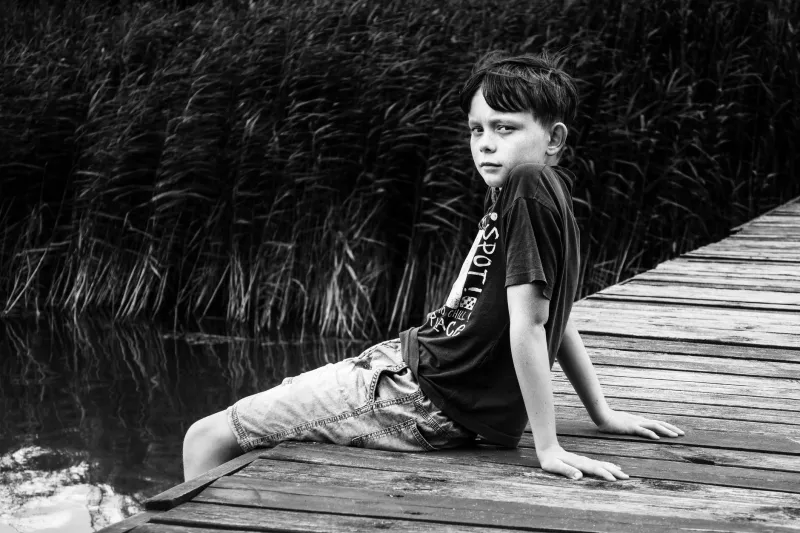
It usually hits somewhere around day two. The novelty of new bunk beds and unfamiliar faces wears off just enough for a quiet, heavy feeling to settle in. Your kid stares at the ceiling of their cabin, listening to the wind move through the pines, and thinks about home — about the dog, about their bed, about you.
Every parent who has ever dropped a child off at summer camp knows the specific guilt of driving away while waving. And every kid who has ever stood at the edge of an unfamiliar dining hall, tray in hand, knows the stomach-drop of wondering if they made a terrible mistake.
Here's the thing nobody tells you at drop-off: that feeling is doing real work.
What Homesickness Actually Is (And Isn't)
Homesickness gets a bad reputation. In popular culture, it reads as weakness — something a "tough" kid shakes off in an afternoon. But developmental psychologists have been pushing back on that framing for decades.
Dr. Christopher Thurber, one of the leading researchers on youth homesickness, describes it not as a flaw in a child's character but as evidence of healthy attachment. Kids who miss home are kids who have something worth missing — a secure family bond, a sense of belonging somewhere. The longing is proof the foundation is solid.
What's interesting is what happens next. When a child sits with that discomfort rather than escaping it — when they can't call home every hour or scroll through Instagram to numb the feeling — the brain starts doing something different. It starts adapting.
The Neurological Case for Letting Kids Be Uncomfortable
Adolescence is a critical window for emotional development. The prefrontal cortex — the part of the brain responsible for regulating emotion, managing stress, and making decisions — is still under active construction well into a person's mid-twenties. What shapes that construction, in large part, is experience.
When a teenager or pre-teen faces a genuinely uncomfortable emotional situation and navigates it without a parent stepping in to smooth things over, they're essentially running a stress-response training session. The brain learns: I felt bad, I stayed present, I got through it, I am capable.
Repeat that enough times over a summer, and you've built something that no classroom can replicate — genuine emotional confidence.
At Camp North End, counselors are trained to recognize the difference between a kid who needs a listening ear and a kid who needs a gentle nudge back toward the group activity. That distinction matters enormously. Compassion doesn't mean rescue. Sometimes it means sitting beside someone for ten minutes and then saying, "Okay, let's go see what's happening at the waterfront."
The First Week Is the Hardest — And That's by Design
Most experienced camp directors will tell you the same thing: if a kid makes it through the first week, the trajectory almost always turns positive. The emotional arc of a typical camp session looks something like this:
Days 1–3: Excitement mixed with anxiety. Kids are taking in new faces, new routines, new smells. Homesickness often peaks here, particularly at night.
Days 4–7: The first real tests. A kid struggles with a ropes course element, gets frustrated during a kayaking lesson, or has a minor conflict with a cabin mate. This is where the emotional work actually begins.
Week 2 onward: Something shifts. Friendships start to feel real. Small victories accumulate. The same kid who cried quietly into their pillow on night two is now the one teaching a newer camper how to tie a bowline knot.
That arc isn't accidental. It's what intentional program design looks like.
What Parents Can Do Before Drop-Off
The research on homesickness consistently points to one variable that predicts how well a child copes: preparation. Kids who arrive at camp having had honest conversations about what to expect tend to manage the transition significantly better than kids who were told everything would be "so fun" from day one.
A few things that actually help:
Normalize the feeling ahead of time. Tell your kid that missing home is normal, that it doesn't mean something is wrong, and that most campers feel it at some point. Removing the shame from the emotion gives kids permission to feel it without panicking.
Avoid the "rescue contract." One of the most well-documented predictors of prolonged homesickness is a parent's promise to come get a child if they're unhappy. It's understandable — but it gives the brain an exit ramp it will keep looking for. Commit to the session together, as a family decision.
Write letters before you leave. Some families pre-write a week's worth of letters and hand them to the camp office to distribute daily. Getting mail is a powerful mood-lifter, and it signals to your kid that you're thinking about them without requiring a phone call that might spike anxiety on both ends.
Talk about what they're excited about, not just what they'll miss. Anticipation is a useful emotional tool. "What's the first activity you want to try?" is a better question than "Are you going to be okay?"
What Campers Can Do When the Feeling Hits
For kids who are old enough to read this — or whose parents want to share it — here's what the research and our counselors consistently recommend:
Name it. Saying "I feel homesick" out loud to a counselor or cabin mate takes some of the power away from it. Emotions that stay unnamed tend to grow.
Stay in motion. Homesickness intensifies during downtime. Getting into an activity — even one you're not sure you'll like — interrupts the thought loop.
Give it a few days before deciding anything. Feelings at day two are not accurate predictors of how you'll feel at day ten. The brain needs time to adjust to new environments. Trust the timeline.
Find one person. You don't need to be friends with everyone in your cabin by Thursday. You need one person to eat breakfast with. Start there.
The Paradox That Makes It All Worth It
Here's the part that surprises most parents: the kids who struggle the most with homesickness in the first week are often the ones who are most devastated to leave at the end of the summer.
That's the paradox. The place that felt foreign and uncomfortable becomes, over the course of a few weeks, a place that feels genuinely like theirs. The friendships forged in that discomfort are sturdier than the ones built on easy circumstances. The confidence earned by staying when everything in them wanted to leave is a different kind of confidence than anything they could have gotten at home.
Under the northern sky, with no Wi-Fi and a lot of open wilderness, kids find out what they're made of. And what they're made of turns out to be a lot more than they — or you — expected.
That flagpole moment? It's not the beginning of a hard summer. It's the beginning of something that lasts a lot longer than summer.