When Your Kid Comes Home Knowing More Than You Do
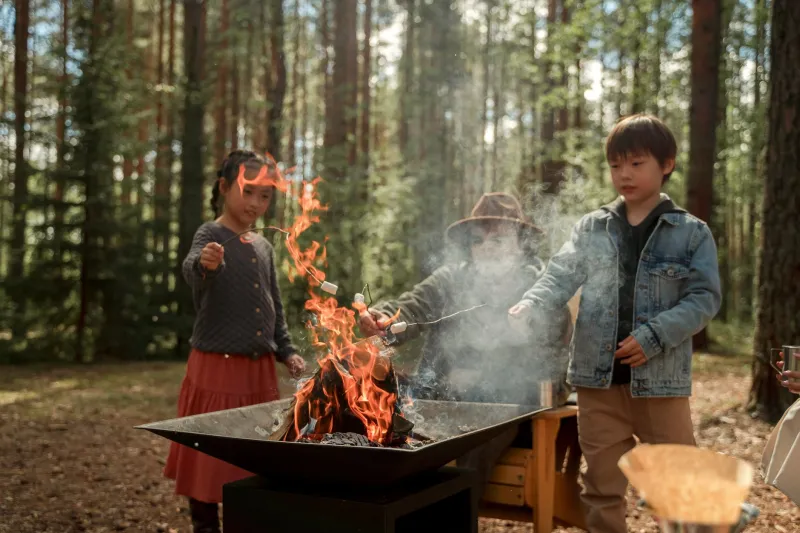
You're standing in the backyard, trying to get a campfire going for the neighborhood cookout. You've crumpled up newspaper, stacked the logs in what you're pretty sure is the right configuration, and struck the match three times. Nothing.
Then your twelve-year-old walks over, tilts their head slightly, and says — with zero condescension, somehow — "You need more tinder underneath. And the airflow's blocked."
Two minutes later, the fire is going.
Welcome to the reverse culture shock nobody really prepares you for.
The Moment the Dynamic Flips
For most families, outdoor knowledge has always flowed in one direction: from the adults down to the kids. Mom knows which berries not to eat. Dad figures out which way is north. That's just how it works.
But spend a summer at a northern wilderness camp — really spending time learning to read terrain, navigate by landmarks, manage weather, build shelters, and keep calm when things go sideways — and something changes in a kid. They come home carrying a quiet kind of competence that most adults frankly don't have.
It's not arrogance. It's just knowledge. Real, practiced, tested-in-the-field knowledge.
And honestly? That's a little disorienting for parents. Even the ones who are thrilled about it.
What They Actually Know (That You Probably Don't)
It's worth getting specific here, because the gap can be surprisingly wide.
A kid who's spent a summer at a northern camp has likely navigated with a topographic map and compass — not GPS, not Google Maps. They've read weather patterns by looking at cloud formations. They've packed a bear canister, filtered water from a backcountry stream, and made judgment calls about when to push forward and when to turn back on a trail.
They know how to dress in layers for genuinely cold conditions, not just "it's a little chilly" conditions. They know what hypothermia looks like in someone else and what to do about it. They can set up a tent in the dark, in the rain, without swearing (much).
These aren't trivial skills. A lot of adults who consider themselves outdoorsy don't actually have all of them. So when your kid starts gently pointing out that you've packed cotton base layers for a weekend hike — "cotton kills, Mom" — they're not being a know-it-all. They're being accurate.
The Subtle Power Shift at Home
Here's where it gets interesting from a family dynamics standpoint.
Parents are used to being the authority. That's the job. And most of the time, kids accept that without much friction. But when a child returns from camp with a genuinely superior skill set in a specific domain, the usual hierarchy gets a little wobbly — and both sides can feel it.
Some kids handle the new role gracefully, sharing what they know without making anyone feel small. Others — especially teenagers — can lean into it a little harder than necessary. And some parents, even well-meaning ones, unconsciously push back. They second-guess the kid's recommendations, minimize the expertise, or quietly avoid situations where the child's knowledge would outshine theirs.
None of that is helpful. And all of it is understandable.
The move that actually works? Lean in.
How to Let Your Kid Lead (Without Losing Your Mind)
This doesn't mean handing over the car keys and letting your thirteen-year-old plan the entire Boundary Waters trip solo. It means being intentional about creating space for their expertise to show up and matter.
Start small. Planning a family hike? Ask your camper to help choose the route and explain their reasoning. Heading out for a weekend of car camping? Let them take point on the gear checklist. Building a fire at the cabin? Step back and watch. Ask questions. Be genuinely curious.
This does something important for the kid: it signals that the skills they worked hard for are real and valued, not just "camp stuff" that gets shelved when they get home. That validation matters more than most parents realize.
It also does something important for the family: it builds a shared outdoor language. When your kid teaches you how to read a contour line on a topo map, you're not just learning a skill. You're spending time together in a way that feels genuinely collaborative, not performative.
When the Student Becomes the Teacher (and What That Builds)
There's solid research behind what happens to kids when adults trust them with real responsibility. Confidence goes up. Engagement goes up. The sense that their contribution matters — that they're not just along for the ride — shapes how they see themselves long-term.
Letting your kid be the family's outdoor expert for a weekend isn't just good for them in the moment. It's practice for a kind of self-assurance that carries into classrooms, jobs, and relationships down the road.
And for parents? There's something quietly powerful about watching your child walk you through something they genuinely know better than you do. It's one of those small glimpses of who they're becoming — competent, capable, ready to figure things out.
That's what a summer up north is supposed to do.
A Few Ground Rules for the Role Reversal
If you're going to make this work, a couple of things help.
Don't fake it. If you don't know how to read a compass, say so. Your kid almost certainly does, and pretending otherwise just creates friction.
Don't let it become a power struggle. If your camper is being insufferable about their new expertise — and some of them will be, at least briefly — address that directly but gently. The goal is collaboration, not a referendum on who's in charge.
Follow their lead on the big decisions, not the safety ones. Your kid can absolutely choose the trail. You still make the call if the weather turns dangerous or someone gets hurt. That boundary matters, and most camp-trained kids understand it.
Plan something that actually uses their skills. Don't just nod along at home — get outside together. A weekend trip where your camper's navigation, gear knowledge, and wilderness judgment genuinely come into play is worth ten conversations about it.
The Bigger Picture
There's a version of the returning camper story where the kid comes home changed and the family doesn't quite know what to do with that. The new skills go unacknowledged, the confidence slowly deflates, and by October it's like the summer never happened.
Then there's the version where the family leans into it. Where the kid becomes the reason the whole family starts spending more time outside. Where a twelve-year-old's compass skills turn into a family tradition of annual backcountry trips. Where the power shift — weird and slightly humbling as it is — becomes the thing that brings everyone closer.
That second version is available to pretty much every family. It just requires parents who are willing to be students for a little while.
Your kid went north for the summer and came back knowing things you don't. That's not a problem to manage. That's a gift — if you're willing to receive it.