What the Quiet Does to a Kid: How Northern Wilderness Rewires the Way Young People Listen
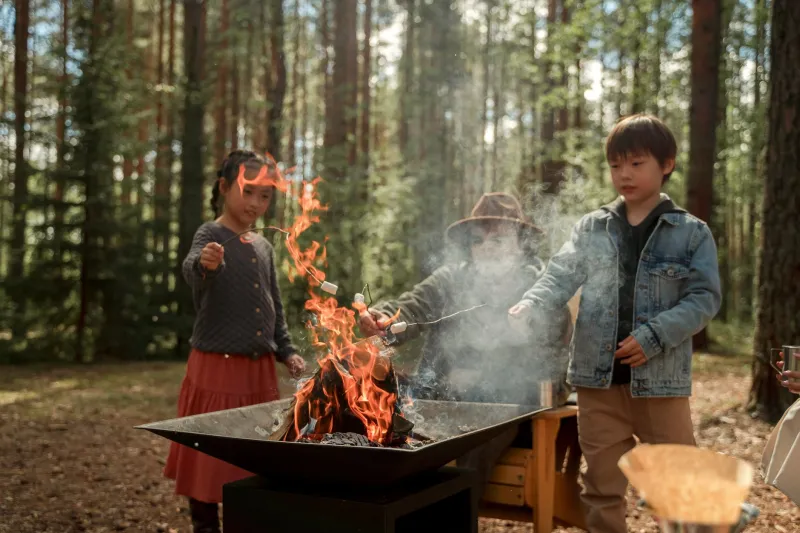
There's a moment that happens somewhere around day three at a northern wilderness camp. The group is hiking through boreal forest, maybe following a creek bed or climbing toward a ridge, and someone stops talking. Then everyone stops talking. Not because a counselor told them to. Not because anyone is uncomfortable. They stop because the woods got loud in a way they hadn't noticed before — wind in the spruce, water moving somewhere below, a bird doing something strange and rhythmic overhead.
For most of these kids, it's the first time in years that silence has felt like something rather than nothing.
That moment matters more than it looks. And the science behind it is worth every parent's attention.
The Problem With a World That Never Shuts Up
The average American teenager is exposed to somewhere between seven and nine hours of screen media per day, according to data from Common Sense Media. That number doesn't even count passive background noise — the television running in the next room, the playlist on shuffle, the notification chimes stacking up like digital barnacles on their attention span.
What researchers have found is that constant low-level noise and digital stimulation don't just distract kids. They actually reshape the brain's default mode — the way it operates when it isn't being asked to do anything specific. Over time, a brain trained on perpetual input loses its ability to rest, reflect, and process incoming information with any real depth. It starts skimming. It starts anticipating the next thing instead of absorbing the current one.
In short, it stops listening.
This isn't a discipline problem or a generational character flaw. It's neurology. And it's reversible.
Attention Restoration Theory, Explained Without the Jargon
Back in the 1980s, environmental psychologists Rachel and Stephen Kaplan developed what they called Attention Restoration Theory, or ART. The core idea is straightforward: the human brain has two modes of attention. Directed attention is the focused, effortful kind — the kind you use when you're taking a test or following a conversation at a noisy table. Involuntary attention is the soft, effortless kind that kicks in when you're watching a river or staring up at a sky full of stars.
Directed attention is a limited resource. It depletes. And when it's depleted, you can't listen well, process emotions effectively, or engage meaningfully with the people around you.
Natural environments — particularly expansive, quiet, northern ones — are exceptionally good at restoring directed attention. Not because nature is boring, but because it engages involuntary attention without demanding the effortful kind. The brain gets to breathe. It recovers its capacity to focus, to absorb, to actually take things in.
A summer camp in the northern wilderness isn't just a fun place to be. For many kids, it's a recovery room for an overworked brain.
What Happens When the Noise Goes Away
The first day or two can be rough. Kids who are used to constant stimulation often feel restless, irritable, or oddly bored when the digital noise disappears. Counselors at northern camps know this phase well. It's real, and it passes.
What comes next is harder to describe but easy to recognize. Kids start noticing things. Not the performative noticing of someone trying to seem mindful, but genuine, spontaneous observation. They comment on the way the light changes through the trees at different hours. They start asking questions about animal tracks. They tune into the rhythm of the group — who's tired, who's frustrated, who needs a minute.
They start listening.
This isn't coincidental. When directed attention has had a chance to restore itself, the brain becomes dramatically more capable of processing social and emotional information. Conversations get longer and more substantive. Eye contact becomes more natural. Kids who spent the school year giving one-word answers at the dinner table start telling stories around the campfire that last twenty minutes.
Parents notice it the second their kids come home. Something is different about the way they engage. They wait before they respond. They ask follow-up questions. They seem, somehow, more present.
Listening as a Leadership Skill
Here's something worth saying plainly: listening is one of the most undervalued leadership skills in the country right now. In schools, in workplaces, in communities, the ability to genuinely hear what someone else is communicating — not just the words, but the meaning underneath them — is increasingly rare and increasingly valuable.
Northern wilderness camps build this skill in a way no classroom can replicate, because they create the conditions where listening is both necessary and rewarded.
On a multi-day backcountry trip, you have to listen to your group. You have to pick up on the early signs that someone is struggling before they say so. You have to hear what your counselor is explaining about weather or navigation or water safety and actually retain it, because the margin for error is real. You have to communicate clearly in moments of stress, which means you first have to learn how to receive information clearly when things are calm.
These aren't soft skills. They're survival skills. And kids who develop them in the wilderness bring them home to every team, every classroom, every relationship they're part of.
The Campfire Effect
There's something specific worth mentioning about campfire conversation, because it keeps coming up in research on outdoor youth programs and in the stories families share when they talk about what camp actually changed.
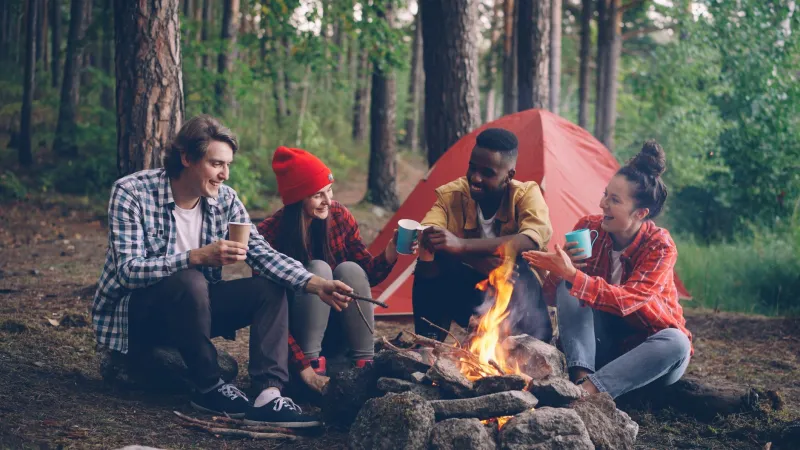
A campfire is, by design, a low-stimulation, high-connection environment. There's nothing to scroll, nothing to click, no competing screen. The light is warm and slightly hypnotic. The group is physically close. The conversation tends to slow down naturally.
What researchers who study adolescent communication have found is that this kind of unhurried, low-stakes conversation is exactly where young people develop their capacity for emotional honesty. They say things around a campfire that they'd never say at school. They listen to things they'd normally tune out. The absence of digital escape routes means they stay in the conversation, and staying in the conversation is where real listening — and real connection — actually happens.
Camp North End counselors aren't running therapy sessions around the fire. They're just building fires and letting kids be kids in a space that's quiet enough for something real to happen.
What You'll Notice When They Come Home
Every family is different, and no summer at camp transforms a teenager into a perfect communicator overnight. But parents who've sent kids north consistently describe a version of the same shift: their child came home and seemed to actually hear them. Not perform listening, but genuinely receive what was being said.
Teachers notice it too. Kids who return from a summer in the northern wilderness tend to engage differently in class discussions. They're more comfortable with pauses. They're less reactive. They ask better questions.
Some of this fades as the school year wears on and the old noise creeps back in. But the neural pathways that were built in the quiet — those stick around. The brain that learned to restore itself once knows how to do it again.
That's the real gift of a northern summer. Not just the memories, and not just the skills. It's the discovery that silence isn't empty. It's where everything important actually lives.