Suddenly the Smartest Kid in the Room: What Happens When Camp-Trained Kids Come Home as Wilderness Experts
Something shifts on the drive home from camp pickup. It might take a day or two to surface, but eventually it comes out — usually at dinner, or in the backyard, or the moment your kid spots a bird they can actually name. They start talking. Not the half-mumbled answers you get during the school year. Real, confident, opinionated talking. About knots. About fire-starting. About which cloud formations mean rain is two hours out.
And the friends they grew up with? They have absolutely no idea what to do with this person.
That gap — between who your kid was before camp and who they are now — is one of the most quietly powerful things a northern wilderness summer can produce. It's a kind of reverse culture shock, and understanding it can help you make the most of it instead of watching it slowly fade by October.
What "Knowing Things" Does to a Teenager
There's a difference between classroom knowledge and hard-earned competence. Your kid has both kinds now. They didn't just read about building a shelter — they built one in the rain, probably failed the first time, and figured it out anyway. They didn't watch a video about wilderness navigation — they actually got turned around on a trail and found their way back using a topographic map and their own judgment.
That kind of knowledge doesn't live in your head. It lives in your hands and your gut. And when a kid comes home carrying that kind of competence, it shows — not in a showy way, but in the quiet confidence of someone who has genuinely done something hard.
Psychologists who study adolescent development talk a lot about the importance of authentic mastery experiences — moments where a young person earns real skills through real effort. Northern wilderness camps deliver those moments in concentrated doses. When your kid returns to their friend group as the person who actually knows how to read a river current or identify edible plants in the wild, that's not trivia. That's identity.
The "Expert" Dynamic in Friend Groups
Here's where it gets interesting. Most teenagers have never experienced being the unambiguous expert in a room. School flattens a lot of that — grades sort kids by performance, and social hierarchies tend to reward different things entirely. But come September, your camp kid walks back into their friend group carrying knowledge that nobody else has.
Some kids handle this gracefully from the start. Others need a little coaching. There's a real temptation to either over-explain everything (which gets exhausting for everyone) or to clam up and let the knowledge quietly disappear (which is genuinely sad to watch).
The sweet spot is mentorship — and that instinct is worth encouraging. If your kid's friend group is curious, lean into it. Suggest a backyard fire-building session. Propose a weekend camping trip where your kid takes the lead on a few skills. Even something as simple as a nature walk where they're the one pointing out tracks or explaining what a certain moss growth tells you about a tree's health can reinforce that expert identity in a healthy, social way.
The goal isn't to make your kid the wilderness lecturer at every cookout. It's to give them a context where their knowledge has real, visible value.
How Parents Can Channel This Without Killing It
There's a version of this that parents accidentally undermine. It usually sounds like: "That's great, honey, but maybe don't talk about camp too much — your friends didn't go." The intention is kindness. The effect is to signal that what they learned doesn't quite belong here, in regular life.
Instead, look for ways to integrate the skills into your family's actual routines. Planning a fall camping trip? Let your kid handle the gear list and fire setup. Heading somewhere with trails? Hand over the navigation. Even in small, suburban moments — a thunderstorm rolling in, a bird at the feeder, a spider web in the garden — your kid now has context and vocabulary that can make those ordinary things genuinely interesting.
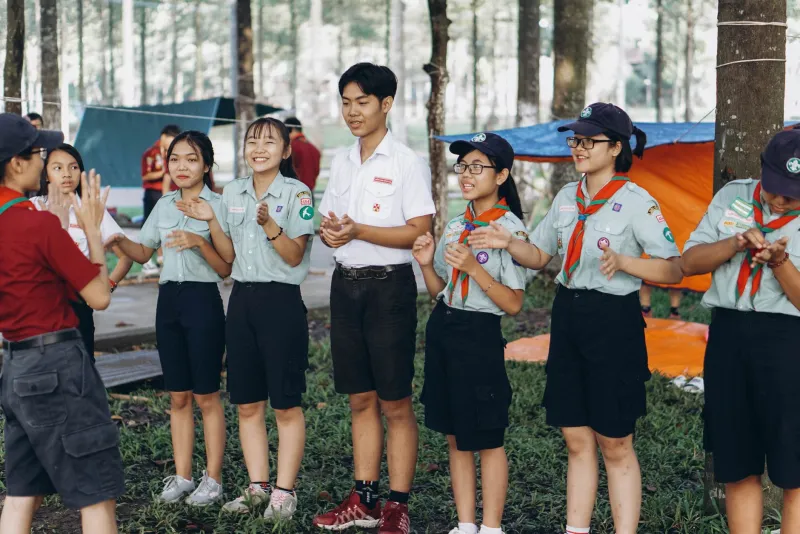
You can also look for structured mentorship outlets. Many communities have Scout troops, outdoor education programs, or youth nature clubs that would genuinely benefit from a teenager who spent a summer learning wilderness skills from experienced northern guides. Some kids thrive when they're given a real audience — younger siblings, neighborhood kids, a school outdoors club — where sharing what they know is actually expected and welcomed.
This isn't about manufacturing opportunities. It's about not letting the momentum die because the calendar changed.
The Longer Arc of Outdoor Competence
Here's what the research — and frankly, a lot of common sense — tells us: kids who develop real outdoor skills during adolescence are more likely to carry those skills, and that confidence, into adulthood. The teenager who knows how to start a fire in wet conditions has internalized something that goes well beyond fire-starting. They've learned that problems have solutions, that frustration is a step in the process, and that competence is something you build, not something you're born with.
That lesson generalizes. It shows up in college when a difficult course feels impossible. It shows up in a first job when a project goes sideways. It shows up in adulthood when life asks hard things of them.
The kid who came home from a summer in the northern wilderness knowing things their friends don't know is carrying more than a skill set. They're carrying a new self-concept — a version of themselves that is capable, resourceful, and worth listening to.
That's worth protecting.
Keep the North Alive When the Summer Ends
At Camp North End, we see it every year. A kid arrives in June uncertain and a little nervous. They leave in August with calloused hands, a wider vocabulary, and a look in their eyes that parents immediately recognize as something new. The challenge — and the opportunity — is figuring out what to do with that person once they're back in their regular world.
The answer isn't to recreate camp at home. It's to treat what they learned as real, because it is. Give them room to be the expert. Let them teach something. Point them toward people who want to learn what they know.
The northern wilderness gave your kid a gift. How you handle the next nine months determines how long they get to keep it.