Forged in the Wild: Why the Friends Your Kid Makes at Northern Camp Are Built to Last a Lifetime
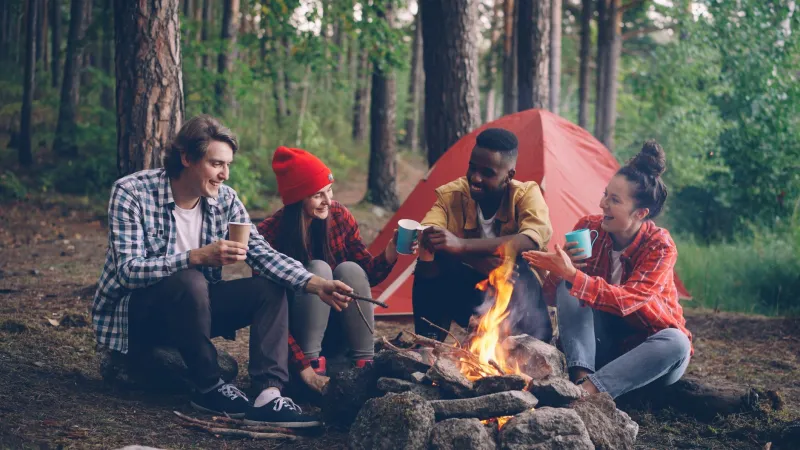
Your kid has probably had a best friend since second grade. They sit together at lunch, trade memes, maybe even live on the same street. That friendship is real, and it matters. But ask any adult who spent a summer at a wilderness camp up north, and they'll tell you something that's hard to explain at a backyard barbecue: the friends they made around a campfire in the middle of nowhere hit different. Decades later, those are often the people they call first.
That's not nostalgia talking. There's something genuinely distinct about the friendships that get built when kids are cold, tired, a little scared, and completely cut off from their usual social scaffolding. And if you're a parent wondering whether camp is worth the investment, understanding why those bonds form the way they do might be the most convincing argument you'll find.
The School Cafeteria Can't Manufacture This
Most of the social environments kids navigate growing up are low-stakes. Who sits where at lunch. Who gets tagged in what Instagram post. Who got invited to whose birthday party. These interactions matter to kids—they really do—but they don't require much. They don't test character. They don't ask anyone to push past their limits or show up for someone when it's genuinely hard.
Wilderness camp flips that script entirely.
When your kid is on day three of a canoe expedition and their tent partner's gear got soaked overnight, they have a choice to make. They can pull back, protect their own dry socks, and stay comfortable. Or they can share what they've got, pick up some of the load, and help their bunkmate make it to the next campsite. That's not a hypothetical ethical scenario from a school worksheet. That's a real moment with real consequences, and the kid on the receiving end of that generosity doesn't forget it.
Psychologists who study friendship formation have long noted that shared adversity is one of the most powerful bonding mechanisms humans have. It's the same reason soldiers form lifelong brotherhoods, or why people who survived a natural disaster together often stay close for years. The brain catalogs those shared experiences differently—they become part of a person's identity, not just a memory.
At northern camps like Camp North End, adversity isn't manufactured drama. It's just the honest reality of spending real time in the wilderness. The weather doesn't cooperate. The trail is harder than expected. The fish aren't biting. And in those moments, kids figure out who they actually are—and who their friends actually are.
What Loyalty Looks Like Without an Audience
One of the quieter things that happens at camp is that kids get to see each other without performance. Back home, teenagers are almost constantly performing. For their parents, their peers, their social media followers. Even their closest school friendships often exist inside a social ecosystem where status, reputation, and perception are always somewhere in the background.
Out in the northern wilderness, that stuff evaporates pretty fast. There's no audience. There's no algorithm deciding who looks coolest. There's just a group of kids trying to navigate a river, cook dinner over a fire, and not get eaten alive by mosquitoes.
In that stripped-down context, kids start to see each other's actual personalities. The kid who seems quiet and overlooked at school turns out to be the one who stays calm when everyone else is panicking. The kid who's always performing for the crowd back home turns out to be surprisingly thoughtful when no one's watching. These revelations form the foundation of friendships built on who someone actually is rather than who they've decided to present themselves as.
That's a rare thing. And teenagers, even if they can't articulate it, recognize it when they feel it.
The Campfire as Classroom
There's a reason the campfire keeps coming up when camp alumni talk about where their friendships really solidified. It's not just the s'mores.
A campfire at the end of a hard day creates a specific kind of atmosphere that's genuinely hard to replicate anywhere else. The day is done. The work is finished. Everyone is tired in the good way. The darkness around the fire pulls the group inward, and conversations happen that simply don't happen in a school hallway or a group chat.
Kids talk about things that matter. They get honest about being scared on the trail that afternoon. They laugh about something that went wrong. They sit in comfortable silence with people they've only known for two weeks but somehow trust completely. That campfire is, in a very real sense, a curriculum—one that teaches kids what it feels like to be genuinely known by another person, and to genuinely know someone else.
Those lessons don't disappear when the summer ends.
Why Parents Should Take These Friendships Seriously
Here's something worth sitting with: when your kid comes home from a summer up north and tells you their camp friends are their real friends, they're not being dramatic. They're reporting something accurate about the depth of those relationships.
A lot of parents make the mistake of treating camp friendships as seasonal—sweet, but ultimately temporary. They're skeptical when their kid wants to plan a trip to visit a friend who lives four states away, or when they spend more time texting someone from camp than hanging out with neighbors they've known since kindergarten.
But those camp friendships often carry more weight precisely because they were built on something real. Your kid and that friend from cabin seven didn't bond over shared classes or proximity. They bonded over a moment when one of them needed help and the other one showed up. That's a different kind of glue.
Encouraging your kid to maintain those relationships—even across distance, even as school life gets busy—is worth the effort. You're not just supporting a friendship. You're reinforcing the values that got built out there: loyalty, follow-through, showing up for people you care about.
The Long Tail of a Northern Summer
The skills kids build at wilderness camp get talked about a lot in terms of the practical stuff. Paddling, navigation, fire-starting, reading weather. All of that matters. But the social and emotional intelligence that develops through genuine camp friendships might be the most durable thing they bring home.
Knowing how to be a real friend—not a convenient one, not a performative one, but an honest, loyal, show-up-when-it's-hard kind of friend—is something a lot of adults are still figuring out. Kids who spend a summer in the northern wilderness, navigating real challenges alongside people they've come to genuinely trust, get a head start on that education that most of their peers simply don't have.
The campfire doesn't just warm you up at the end of a cold northern day. It teaches you something about what it means to belong to something bigger than yourself. And that lesson, it turns out, lasts a whole lot longer than summer.