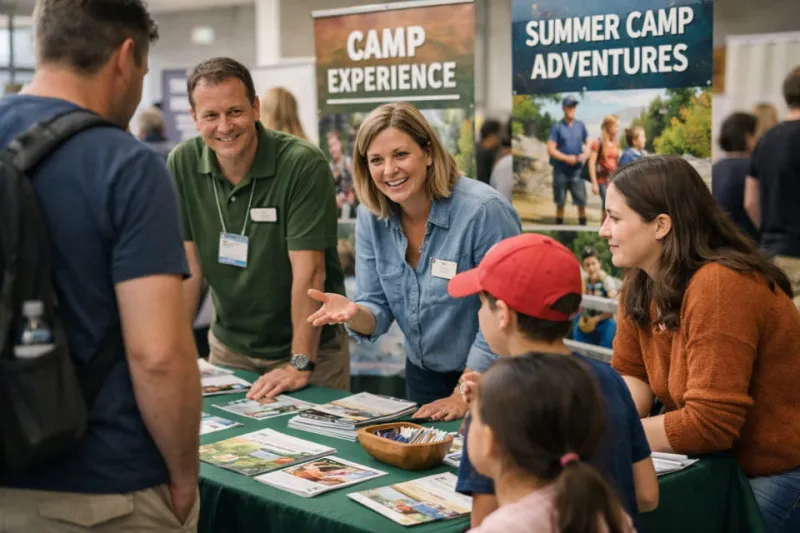
Where Have All the Camp Counselors Gone? Inside the Staffing Crisis Quietly Reshaping Northern Camps
Photo: Mennonite Church USA Archives, No restrictions, via Wikimedia Commons
Ask any adult about their summer camp days and they'll rattle off a name before a memory. Not the archery range. Not the lake. The counselor. The 19-year-old who taught them to split kindling, who sang badly around the fire, who made them feel brave when they were homesick in a bunk bed 400 miles from home.
That person is becoming an endangered species, and the camps across the northern US that depend on them are feeling it. Understanding why — and what great programs are doing about it — matters if you're about to trust one of these young adults with your kid for seven weeks.
The Math Stopped Working
The economics of camp staffing were always a little absurd. Counselors traditionally earned room, board, and a stipend that worked out to less than minimum wage once you divided it across 24-hour days. A generation ago, that trade made sense: college students had long summers, fewer internship obligations, and camp counted as a resume line that signaled leadership.
Then the internship economy happened. A summer at a financial firm or a research lab pays real money and carries real weight on a LinkedIn profile. Camp pays $400 a week and requires you to live in a cabin with twelve eleven-year-olds. For a college student staring down tuition bills, the choice often isn't close.
Add the post-pandemic wrinkle: many camps lost their international counselor pipeline, which had supplied roughly a quarter of the seasonal workforce at American camps through J-1 visa programs. Visa delays, rising program fees, and tighter approvals have left camps scrambling to fill cabins with domestic hires who simply aren't applying in the same numbers.
It's Not Just the Pay — It's the Job
Here's what surprises people outside the camp world: the work is genuinely hard in ways a retail shift never is. Counselors are on duty nearly around the clock. They're mediating friendship drama at breakfast, spotting the kid who isn't eating, running activities in a downpour, and then sleeping in the same room as the campers they're supervising.
Burnout isn't a buzzword here — it's a structural feature of the job unless a camp actively designs against it. And the camps that retain staff year over year tend to be the ones that treat counseling like the skilled profession it actually is.
What the Good Camps Are Doing Differently
The strongest northern camps have stopped pretending the old model works and started rebuilding it. A few patterns worth noticing:
- Real compensation. Some camps now pay returning counselors $700–$1,000 a week, plus travel stipends. If a camp's retention rate is high, money is usually part of the answer.
- Days off that are actually days off. Quality programs schedule genuine breaks — a full day away from campers, not a two-hour window to do laundry.
- Training that means something. Look for camps that run multi-week pre-season training covering child development, behavior management, and mental health first aid — not just a weekend of icebreakers.
- Career pathways. The best programs market camp as leadership development: junior counselor tiers, wilderness certifications like Wilderness First Responder, and letters of recommendation that actually open doors.
How to Read a Camp's Staffing Health From the Outside
You don't need insider access to evaluate this. During your next tour or info session, ask three questions and listen carefully to the answers.
First: What's your staff return rate? A healthy camp typically sees 40–60% of counselors come back. Below 25% and something's wrong — pay, culture, or management.
Second: How many campers per counselor, and how are overnight duties handled? Vague answers here are a red flag. Confident, specific answers are a green one.
Third: Tell me about your leadership team's background. Directors who grew up through the counselor ranks and stuck around tend to run programs worth sticking around for.
Why This Matters More Up North
Northern wilderness camps face a steeper version of this challenge. Their programs lean on specialized skills — canoe tripping, backcountry navigation, cold-water safety — that take years to develop. You can't hire a last-minute replacement to lead a seven-day boundary waters expedition. Depth of staff experience isn't a luxury at these camps; it's the entire product.
That's why the counselor shortage, left unaddressed, doesn't just mean tired staff. It means thinner programs, canceled trips, and eventually, camps that close their gates. The families who care about this tradition have a stake in it — and the simplest way to protect it is to choose programs that invest in their people, and to say so out loud.
The kid who gets a great counselor this summer might be the one running the waterfront in 2035. It's worth making sure that future exists.